
Top 10 Organic Methods to Combat Black Bean Aphids in Garden
Black bean aphids are a pervasive garden pest capable of causing extensive damage to a wide range of plants by feeding on their sap, which weakens the plants and can lead to stunted growth, curled leaves, and reduced yields. Organic black bean aphid control methods provide a sustainable and environmentally friendly alternative to chemical pesticides. These methods harness natural predators, such as ladybugs and parasitic wasps, and organic black bean aphid treatments like neem oil and insecticidal soap recipe to manage aphid populations. This approach not only protects the ecosystem but also fosters garden health too. Black bean aphid organic control methods promote long-term plant health and soil fertility, contributing to a more resilient and organic gardening practice.
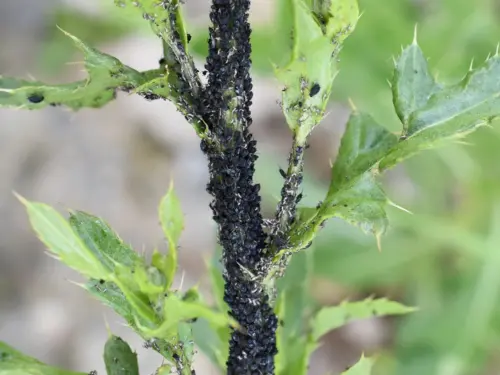
Using natural predators, organic sprays, and preventive measures, gardeners can effectively manage black bean aphid infestations, ensuring their plants thrive without the adverse effects associated with chemical pesticides. Organic methods align with the principles of ecological gardening, promoting balance and harmony within the garden ecosystem.
Understanding Black Bean Aphids
Aphids blackfly (Aphis fabae) are small, black insects that commonly infest a variety of plants, including beans, spinach, and beets. These aphids blackfly are about 1.5-3mm in size and tend to cluster on the undersides of leaves, stems, and growing tips of plants. They have a rapid black bean aphid life cycle, allowing them to reproduce quickly and establish large colonies, making them challenging to control.
Identification and Symptoms
- Appearance: Black bean aphids are easily identifiable by their dark color and pear-shaped bodies. They often form dense clusters on plant parts.
- Black Bean Aphid Life Cycle: The aphids reproduce both sexually and asexually. In warm conditions, they can produce live young without mating, leading to rapid population growth. During cooler months, they lay eggs that can survive over winter.
- Infestation Symptoms: Infested plants exhibit curled and distorted leaves, stunted growth, and yellowing. The aphids excrete a sticky substance called honeydew, which can attract ants and lead to the development of sooty mold—a black fungal growth that covers the plant surfaces.
Why Are They a Problem for Gardeners?
Black bean aphids pose significant challenges for gardeners due to their feeding habits and rapid reproduction. Here are the key issues:
Plant Health and Growth
- Sap Feeding: Aphids feed on plant sap, which is essential for plant health. This feeding weakens plants, causing leaves to curl and growth to stunt. Weakened plants become more susceptible to other stresses, including environmental factors and diseases.
- Honeydew Secretion: Aphids excrete a sticky substance called honeydew, which coats the plant surfaces. This honeydew can attract ants and lead to the growth of sooty mold, a black fungal growth that further reduces the plant’s ability to photosynthesize and thrive.
Disease Transmission
- Virus Vectors: Black bean aphids are known vectors of plant viruses. As they move from plant to plant, they can transmit these viruses, leading to further disease spread and black bean aphid damage across the garden.
Rapid Infestation
- High Reproduction Rates: Aphids reproduce both sexually and asexually, leading to rapid population growth. In optimal conditions, aphid populations can double in just a few days. This quick reproduction results in large infestations in a short period, making black bean aphid control efforts more challenging.
Crop and Aesthetic Damage
- Crop Yield Reduction: In vegetable gardens, aphid infestations can significantly reduce crop yields. The weakened plants are less productive, leading to smaller harvests.
- Aesthetic Damage: For ornamental plants, the presence of aphids and the resulting damage, such as distorted leaves and sooty mold, can severely reduce the visual appeal of the plants.
By understanding these impacts, gardeners can appreciate the importance of early detection and the use of effective organic control methods to manage black bean aphid populations and protect their plants.
Natural Predators

Ladybugs
– Role in eco-friendly Aphid Control: Ladybugs are natural predators of aphids. Both adult ladybugs and their larvae feed on aphids, helping to reduce their populations.
– Attracting and Releasing: Planting flowers like marigolds and daisies can attract ladybugs. Purchasing and releasing ladybugs in the garden can also be effective.
– Life Cycle: Understanding the ladybug life cycle helps in timing their release for maximum impact on aphid populations.
Lacewings
– Benefits: Lacewing larvae are voracious predators of aphids.
– Attracting Lacewings: Planting dill, fennel, and cosmos can attract lacewings to your garden.
– Lifecycle: Lacewings have multiple generations per year, providing continuous aphid control.
Hoverflies
– Role in Aphid Management: Hoverfly larvae feed on aphids, providing natural pest control.
– Attracting Hoverflies: Flowers such as alyssum, yarrow, and dill can attract hoverflies.
– Lifecycle: Hoverfly larvae are highly effective predators during their development stages.
Parasitic Wasps
– Control Mechanism: Parasitic wasps lay their eggs inside aphids, eventually killing them.
– Encouraging Parasitic Wasps: Planting a variety of flowers and maintaining a diverse garden ecosystem can encourage these beneficial insects.
– Lifecycle: Understanding their behavior and lifecycle helps in optimizing their role in aphid control.
How to get rid of black bean aphids
Neem Oil
- How It Works: Neem oil for aphidsdisrupts the hormonal systems of aphids, preventing them from feeding and reproducing.
- Application: Mix neem oil with water and apply it as a foliar spray to infested plants.
- Benefits and Precautions: Neem oil is safe for beneficial insects but should be applied in the evening to avoid harming pollinators like bees.
Insecticidal Soaps
- Effectiveness: Insecticidal soaps dissolve the protective outer coating of aphids, causing dehydration and death.
- Application: Mix the soap with water and spray directly on aphids, ensuring thorough coverage.
- Safety Tips: Use these soaps on cool days to prevent potential black bean aphid damage to plants from sun exposure.
Homemade Soapy Water
- DIY Recipe: Create a mixture of mild liquid soap and water.
- Application: Spray the solution on aphids, focusing on the undersides of leaves where aphids tend to gather.
- Pros and Cons: This method is effective and inexpensive, but may require repeated applications to maintain control.
Nettle Broth
- How It Helps: Nettle broth serves as a natural insect repellent, helping to deter aphids blackfly.
- Recipe and Application: Steep nettle leaves in water, strain the mixture, and spray it on plants.
- Benefits: In addition to deterring aphids, nettle broth enhances overall plant health.
Mechanical and Cultural Methods
Water Spray
- Method: Use a strong jet of water to physically dislodge aphids from plants.
- Best Practices: Perform this action in the morning to allow plants to dry during the day, reducing the risk of fungal diseases.
- Advantages and Limitations: This method provides immediate results but may need to be repeated frequently to maintain black bean aphid control.
Pruning Infested Parts
- Effective Pruning: Remove and properly dispose of heavily infested plant parts to reduce aphid populations.
- Tips: Sterilize pruning tools between cuts to prevent the spread of diseases. Combining pruning with other organic methods can enhance overall effectiveness
Biological methods as Black Aphids Killer
Bioinsecticide

The bioinsecticide offered by Novobac targets a variety of pests, including aphids, using naturally derived ingredients. This bioinsecticide functions by disrupting the nervous system of pests, leading to their eventual death. It is effective against black bean aphids, providing a safe and environmentally friendly alternative to chemical pesticides. Its mode of action ensures minimal impact on beneficial insects and the surrounding ecosystem.
Beauveria bassiana
Beauveria bassiana is the natural biological control of aphids, occurring entomopathogenic fungus that acts as a biological control agent against aphids. The fungus infects aphids by adhering to their cuticle and penetrating their body, ultimately causing death through nutrient deprivation. This biopesticide is effective at all life stages of the aphids and is applied via foliar spray, providing comprehensive pest management. It is an eco-friendly option that supports sustainable agriculture by reducing reliance on chemical pesticides.
Preventive Measures
Preventing Infestations
- Regular Inspections: Regularly check plants for signs of aphids. Early detection can prevent large infestations.
- Debris Removal: Clear plant debris and weeds that can harbor aphids and their eggs.
- Mulching: Use mulch to create a barrier that helps deter aphids and maintain soil moisture.
Resistant Varieties
- Choosing Resistant Plants: Select plant varieties known for their resistance to aphids. These plants are less likely to suffer from severe infestations and can naturally repel aphids blackfly.
Plant Health
- Proper Watering and Fertilization: Ensure plants are adequately watered and fertilized. Healthy plants are more resilient and less attractive to aphids.
- Care and Maintenance: Regularly prune and care for plants to promote strong growth and reduce stress, making them less susceptible to pests.
Supporting Natural Predators
- Attract Beneficial Insects: Create a garden environment that attracts and supports natural aphid predators such as ladybugs, lacewings, and hoverflies.
- Habitat Creation: Plant a variety of flowers and herbs that provide habitats and food sources for these beneficial insects, enhancing their presence in the garden.
Conclusion

Organic methods for black bean aphids prevention are effective and environmentally friendly. By combining natural predators, organic sprays, mechanical methods, and preventive measures, gardeners can maintain a healthy, aphid-free garden. Using these techniques not only protects the ecosystem but also promotes sustainable gardening practices.
References:
- Qubbaj, Tawfiq, and Rana Samara. “Efficacy of Three Entomopathogenic Fungi Beauveria bassiana, Metarhizium anisopliae and Lecanicillium lecanii Isolates against Black Bean Aphid, Aphis fabae (Scop.)(Hemiptera: Aphididae) on Faba Bean (Vicia faba L.).” Legume Research-An International Journal 45.12 (2022): 1572-1579.
- Benyan, Layla A., Jinan M. Kalaf, and Dawood S. Hamid. “Evaluation of the efficiency of some vegetable oils and bio-fungi in control-ling Aphis fabae Scopoli of black bean insect.
Previous Page:
Bashirat Alhassan
Time
2026-06-20 23:03
IP
102.90.97.250
Message content:
Good afternoon, please I would love to make enquiry on your technical beauveria bassiana germination grade and price.
FIKILE MATHUNJWA
Time
2026-05-04 21:51
IP
102.212.203.29
Message content:
Please this is an SOS. I have just started growing coffee arabica and this is my first harvest. However as the cherries started to rippen the skin changed to black and dried up. how can I can I get assistance please? Im from Eswatini
John Jethro
Time
2026-04-29 08:24
IP
112.202.112.53
Message content:
I dealt with root rot on one of my orchids and it escalated fast, just like described. I tried disinfecting tools and doing a quick rinse treatment, but I learned Physan is more for sanitation than a full cure. Midway I checked https://purelyponds.com/product/physan-20-1-gallon/ and adjusted my dilution. Cutting damaged roots and improving airflow helped way more.
gautam
Time
2026-01-17 14:04
IP
223.178.84.231
Message content:
Good details. As far as pest management and control is concerned there are quite a few pesticides which effects only the pests and does not harm the ecosystem. Safer for humans and plants.
raghav
Time
2025-12-23 19:09
IP
223.178.86.132
Message content:
Insects and plants are like made for each other. Plants and flowers do attract insects. But if you are worried about caterpillars which eat up the plants and their leaves then it is best to go for a pesticide or contact a pest control company.
Ganesh Kumar C
Time
2025-10-21 13:44
IP
223.178.86.3
Message content:
It is always best to do a professional pest control service. A complete pest control work for insects will be good. Termites and bedbugs requires pesticides which are specifically made for them. For all other insects a common pesticide will do. Many insects are ****erous and can cause serious health issues so better to get the pest control work done.
diya
Time
2025-09-01 19:30
IP
223.178.82.254
Message content:
There might be hundreds of home made methods to prevent mosquitoes but all are not that effective. Mosquitoes are ****erous so better not to take risk. Fixing mosquito nets is the best and the only solution.
Bobby soni
Time
2025-06-14 17:28
IP
2409:4056:2011:153c:f087:5952:16f1:6d88
Message content:
शिमला मिर्च का पौधा मुरझाने के लिए क्या करें
Glenys Smith
Time
2025-05-13 10:22
IP
24.142.9.36
Message content:
Can I order Tranum Shield on line from you.
Aniefiok Jackson
Time
2025-01-07 19:32
IP
197.210.79.219
Message content:
What type of drug will I use for pepper when it wilter
回复内容:
这里是占位文字
Powered By
这里是占位文字
2025-02-13 09:12
Ovais Mirza
Time
2024-12-30 20:28
IP
139.5.254.149
Message content:
This article provides insightful and practical tips for tackling Fusarium wilt in tomatoes using organic methods. It emphasizes the importance of hygiene, disease-resistant varieties, and crop rotation to prevent and manage the disease. The advice on maintaining well-draining soil and proper watering techniques is crucial for reducing the likelihood of Fusarium wilt. A helpful guide for organic gardening!
回复内容:
这里是占位文字
Powered By
这里是占位文字
2025-02-12 17:40
该组件调取留言后的信息,使用后若不显示,则需要检查下后台有没有留言者的留言数据。有的话还不显示,需要重新绑定【在线留言】应用
Aniefiok Jackson
Ovais Mirza
Latest Post

Cucumber Leaf Blight: How to Identify, Prevent, and Manage Common Leaf Diseases
Once the brown spots, yellow patches and dead leaf area appears throughout the crop, cucumber leaf blight can be a serious issue for farmers. The symptoms may decrease the production of good fruit and can have an impact on fruit quality and quantity as well.
Mycorrhizal Fungi and Plants: Benefits, Risks, and What Gardeners Should Know
While plants need the soil to provide them with nutrients, they aren't able to utilize nutrients in all soil. This is where arbuscular mycorrhizal fungi (AMF) may be of great benefit. These small soil bugs bring the plants closer to the soil, increasing the plants ability to absorb nutrients, such as phosphorus uptake by mycorrhizal fungi.
Verticillium Wilt Olive Tree: Symptoms, Causes, and Effective Management Strategies
Verticillium wilt is a disease that cannot be managed with a single treatment, but needs to be managed with an integrated approach. The risk can be mitigated by using healthy planting material, growing particularly disease resistant cultivars (if available) and avoiding the transfer of contaminated soil onto the farm and by good orchard hygiene.
CONTACT US
Office 38/1502, No 660,Hanguang Rt., Changsha City, Hunan, China


