

Solution
Organic Pest Control and Disease Treatment Microbial Solution for Tomato
Introduction
Tomatoes are among the most famous crops grown throughout the world but unfortunately are very vulnerable to different kinds of common tomato pests and diseases. Tomato pest and disease management is important to achieve good plant health status to enhance production. There’s also a section on tomato pest and disease control with a focus on tomato plant wilting; pest management naturally and sustainably with packaged organic pest control for tomato plants; and disease management naturally with organic treatment for tomato diseases.

Organic Pest Control For Tomato Plants
Target Pests: Tomato Hornworm Control, Beet Armyworms Control, Tomato Leafminer Control, Tomato Looper Control, Tomato Fruitworm Control
Organic Insecticide for Tomatoes: BT Thuricide
Active Ingredient: Bacillus thuringiensis subspecies kurstaki
|
Tomato Hornworm (Manduca quinquemaculata) Tomato Pests |
Beet Armyworm Tomato Pests |
Leafminers Tomato Pests |
Loopers |
Tomato Fruit Worm |
|
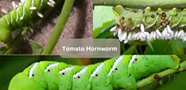
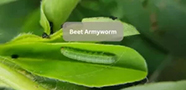
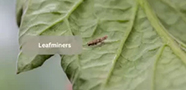
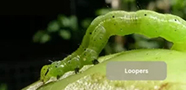
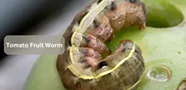
Tomatoes should be observed regularly for pest attack symptoms by checking for things like caterpillar tracks, eggs or colored leaves. The early method of detection always guarantees timely application of BT Thuricide. In respect to pests such as hornworms, loopers and armyworms, it is recommended that BT Thuricide solution be applied at the larval stage particularly when the pests are feeding. Repeat to regain back the control of a situation as and when necessary. Use trap crops such as dill or marigold around the tomato field to avoid flocking on tomato plants thus cutting on pressure. If trap crops are attacked, then use the BT Thuricide only on a local basis. This Integrated Pest Management approach involves cultural practices and the non-toxic nature of the BT Thuricide (Bacillus thuringiensis subspecies kurstaki) to both pests and beneficial organisms and the physical characteristics of the environment.
Target Pests: Aphid Control on Tomatoes,Spider mites Control on Tomatoes, Whitefly Control on Tomatoes, Tomato Stinkbugs and Thrips Control
Organic pesticide for tomato plants: Beveria WP
Active Ingredient: Beauveria Bassiana
|
Aphids (Aphis spp.) |
Whiteflies (Bemisia tabaci) |
Spider Mites (Tetranychus spp.) |
Aphids (Aphis spp.) |
Thrips (Thysanoptera spp.) |
Stinkbugs Tomato Pests |
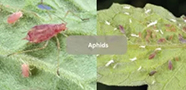

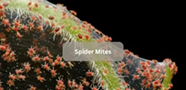
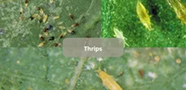
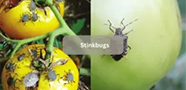
The aphids, spider mites, whiteflies, stinkbugs, and the thrips can be easily checked on plants at an early stage. Some signs of plant pests that you can identify include discolored leaves, which can appear yellow, residue like honey on leaves, which leads to formation of sugars and is an indicator of noctuid pest infestation, while other forms of plant nutrient deficiency includes curling of the foliage, and easily visible pests on the plant. It makes easier for the disease to be treated with Beveria WP if it is diagnosed early. Organic pest control for tomato plants of these pests should be done using Beveria WP which is made from Beauveria bassiana. But when you are applying the spray, do it directly on the target site, on upper side of the under surface of the leaves and on the important points where the pests would usually feast on. The fungal spores targets and affects pests but are non-toxic to pollinators and other useful insects.In controlled environment like the green house bring down the humidity level as it is not suitable for mold or pests. Beveria WP should be used particularly for pest control.Using eco-technology together with Beveria WP, a biological agent containing Beauveria bassiana, this tool helps manage aphids, spider mite, whiteflies, stink bugs, and thrips without harming useful insects and contributes to eco-farming.
Target Pests: Colorado Potato Beetles Control, and Organic Flea Beetles Control
Organic Pesticides for Beetles: Myco Pestop
Active Ingredient: Metarhizium anisopliae
|
Colorado Potato Beetle |
Flea Beetles |
|
|
|
|
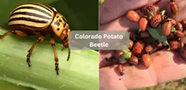
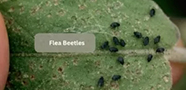
Check for Colorado potato beetles and flea beetles by scouting fields for eggs, larvae or adults of the former and the holes or shot-hole appearances on the foliage caused by the latter. The early ability to apply, results in the timely use of Myco Pestop.
They should spray Myco Pestop which is a product containing Metarhizium anisopliae which is good for these pests. Use when pests are out at large especially if there is a clear evidence of their activities in certain regions on the compound. It uses the fungal spores in a way that it infect and regulate the beetles in the natural environment. Crop rotation must be done yearly in order not to have a buildup of populations of pests that attack plants. Do not cultivate potatoes or other sensitive crops such as tomatoes, peppers or eggplants where the beetles were last seen during the previous season. Clear vegetation surrounding the field in order to deny space to Colorado potato beetles and flea beetles for the formation of their overwintering sites. You should utilize the floating row covers to shield young plants from early payments of pest attacks. Use Myco Pestop when your CO potato beetles are in the larval stage and during the periods of intense flea beetles activity. This makes sure the fungus directly affect pests in their immature stages to minimize their population considerably.
With the use of Myco Pestop evidently the Colorado potato beetle and the flea beetle, this IPM strategy compliments cultural, biological and mechanical controls for healthy crops and sustainable farming.
Target Pests: Tomato Cutworm Control
Organic Pesticide for Cutworms: Met Zone
Active Ingredient: Metarhizium anisopliae
|
Cutworms Tomato Pests |
|
|
|
|
|
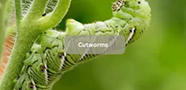
Check fields for signs of cutworms including tomato plant wilting of seedlings and stems cut off very close to the ground. It is recommended to employ the pheromone traps; for larvae searching, go out in the evening as this is the most active time. Early diagnosis guarantees preventive application of Met Zone as a treatment option. The cases should be treated using Met Zone containing Metarhizium anisopliae, a fungus-based organic pest control for tomato plants. This product affects and kills cutworms at all the developmental stages. Use it as a broadcast treatment and directly on the soil or around the soil where the cutworms may be present especially at the base of plants.Tillage should also be done to depths in order target the larvae in the soil when preparing the land for planting. This helps to slowly build up pressure on cutworm populations and at the same time increase the efficiency of subsequent applications of Met Zone. Do not plant when many weeds and organic materials still remain in the field because these act as homes and foods of cutworms. To guard young stems it is advisable to cover the plants with mulches as well as barriers. Met Zone must be used during the soil preparation stage or where there is first indication of infestation by cutworm larvae for cutworm biological control. The fungal spores are most effective with correct moisture levels in the soil, so water appropriately if necessary.
This paper, therefore, presents an effective IPM strategy that incorporates Met Zone (Metarhizium anisopliae for tomato nematode treatment) together with biological, cultural, and mechanical control to minimize the use of chemical control, ensure successful protection of seedlings against cutworms, and, ultimately, encourage sustainable farming.
Target Pests: Nematode Control in Tomatoes
Organic nematode and bionematicide: Nema Pro or Nema ProMax
Active Ingredient: Paecilomyces lilacinus
|
Root-knot Nematodes (Meloidogyne spp.) |
|
|
|
|
|
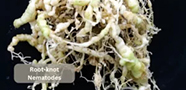
Nema Pro is a product that consists of Paecilomyces lilacinus – a parasitic fungus which controls nematodes, nematodes, eggs, juveniles and adults.Use it by pouring on the ground or make it a practice to use it when preparing the soil for planting. The effective suppression should be done in areas that more frequently contain the nematode. Plant non-host crops in between and simultaneously plant crops like cereal or legumes so that the nematode cannot complete its lifecycle hence population will continuously be depleted. Do not cultivate crops which can be attacked by nematodes on the same land each time such as tomatoes, eggplants, and peppers.For efficient suppression of the nematode pathogens, incorporation of organic matter such as compost, green manure or farmyard manure is recommended because they support growth of micro–organismsfriendly to the bioagent P. lilacinus. Nematodes are described as being controlled by healthy soils.Before planting, in hot months, cover the soil with plastic sheets to increase the temperature of the soil. This heat treatment will eliminate nematodes and conduct an environment that is suitable for Nema Pro application.Use Nema Pro during the early stages of the nematodes’ life cycle – before or shortly after planting. More soil moisture is therefore required to support the break and spread of the fungi.
The integration of Nema Pro (Paecilomyces lilacinus for nematodes organic pest control) into an Integrated Pest Management Program can lead to the suppression of nematodes within the growers’ field as well as protect their crops and create a healthy soil for the crops’ farming and production.
Organic Treatment for Tomato Disease
Target Diseases: Anthracnose Tomato Treatment, and Fusarium Wilt Tomato Treatment
Organic Fungicide for Tomatoes: HarzShield
Active Ingredient: Trichoderma harzianum
|
Anthracnose (Colletotrichum coccodes) |
Fusarium Wilt (Fusarium oxysporum) |
|
|
|
|
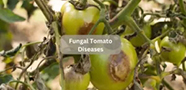
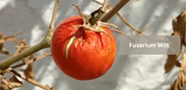
Biological control with HarzShield should be used in advance in order to control anthracnose and fusarium wilt diseases. The active ingredient, trichoderma biocontrol, works by:
- Contending with other pathogens for adjoining sites and resources.
- Saprophytic parasitization of injurious fungi such as Colletotrichum (Anthracnose) and Fusarium oxysporum (Fusarium Wilt).
- Improvement of the root stand and the general plant defense mechanisms.
- It can be applied as a soil drench or seed treatment or by transplant irrigation. Always reapply depending on the level of risk of infection or the crop cycle.
It is suggested to use a crop rotation plan with non-host like cereals or legumes to disrupt the disease cycle. Do not cultivate such crops as tomatoes, watermelons and peppers in the same field season after season. Certain structural characteristics such as the removal and destruction of plant debris, and dead or damaged plants on which pathogens may reside, help to reduce the disease inoculum in fields. This is accomplished by incorporating composts or green manure in the soil to enhance good microbial habitat that support growth of Trichoderma harzianum. Soil pH should be kept close to neutral (6.5–7) to avoid Selected Fusarium spp to dominant. Solarization should be practiced before planting by mulching the soil with clear polythene during a hot period to eliminate soil borne pathogens. Subsequently, spray HarzShield to the soil to repopulate beneficial microbes to the soil matrix. Do not water the plants excessively, something that provides an environment for Fusarium Wilt and Anthracnose. Prevent the spread of pathogens by maintaining foliage dry by using drip irrigation technique . Clear areas surrounding crops that give pathogens such as Anthracnose and Fusarium Wilt other crops to infest on.
Target Diseases: Verticillium Wilt Tomato Treatment
Fungicide for Verticillium Wilt: Cropium
Active Ingredient: Penicillium bilaiae
|
Verticillium Wilt(Verticillium dahliae) |
|
|
|
|
|

Utilization of Biological Control with Cropium is as follows: It can be applied as a soil drench, seed treatment or mixed into the soil to be applied when transplanting or preparing the soil before planting. Reapply based on crop development stage and indication of pathogen popu-lation build-up.
Plant with non-host crops such as cereals or grasses in an effort to reduce build-up of the pathogen – Verticillium dahliae spores in the soil. It’s not wise to plant crops with high susceptibility to pests and diseases in two successive seasons such as tomatoes, eggplants and potatoes. Employ soil solarization under clear polythene covers during the hot months for 4-6 weeks to raise the ground temprature which in turn decreases the viability of the Verticillium spores. Subdued organic matter using composts or green manures to promote friendly mycoflora which inhibits the growth of Verticillium dahliae.Aim at a pH of 7.0-7.5, being a risk factor for pathogens, with an acidic environment being more desirable.Avoid phosphorus leaching by preventing soil water content that is too high to support pathogen proliferation. It is advised to use drip irrigation in order to yield the least splash of water, and thereby reducing its likelihood to infect plants.Routine scouting is done on the scouting checklist during the season to determine if the infested trees are showing any sign of Verticillium Wilt including yellowing of leaves and wilting or vascular discolouration. After a field has been infected with Verticillium Wilt, use Cropium proactively in the affected field.
Target Diseases: Bacterial Spot Tomato Treatment, Bacterial Canker Tomato Treatment, Tomato Mosaic Virus Control, Tomato Spotted Wilt Virus Treatment
Organic Bactericide: Bactonus
Active Ingredient: Bacillus velezensis
|
Bacterial Spot (Xanthomonas spp.) |
Bacterial Canker (Clavibacter michiganensis) |
Tomato Mosaic Virus (ToMV) |
Tomato Spotted Wilt Virus (TSWV) |
|
|


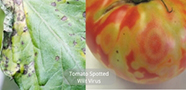
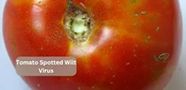
Biological Control with Bactonus is one of the biological controls used to manage pests, which has gave great impact toward being free from the pests for quite sometime. Bactonus should be applied as a foliar spray or as a soil drench as part of a generally recommended interval and time during the growing period.To achieve optimal efficacy, apply the product early in order to prevent diseases from setting in in the first place.
Infected plant residues should be pulled out and discarded in order to minimize bacterial and viral propagules. Do not work in filed when there is dew and the plants are wet since this may transfer bacteria and viruses.Thoroughly intercrop tomatoes with non-host crops such as cereals or legumes in order to disrupt the disease cycle for pathogenic bacteria which can over-winter in the soil or plant residues. Buy seeds that are pathogen-free or in case of purchase of seeds, its better to treat the seeds either by hot water or with an approved anti bacterial solution to get rid of the bacterial pathogens such as the ones causing Bacterial Spot as well as Bacterial Canker. Water should be applied only as a drip or directly to the root area so that much of the water does not come into contact with the leaf surface and increase spread of the bacterial disease. Include organic matters and effectual nutrient placement to cause sturdy plants that disease cannot easily attack. For proper development of the microbial population in the root zone and at plant surfaces use Bactonus on this basis throughout the season.
Tomato Leaf Diseases
Target Diseases: Tomato Early Blight Control, Tomato Leaf Mold Treatment, and Tomato Late Blight Control
Fungicide for Leaf Spot Disease: FloraEgis
Active Ingredient: Trichoderma harzianum
|
Early Blight (Alternaria solani) |
Leaf Mold (Passalora fulva) |
Late Blight (Phytophthora infestans) |
|
|
|

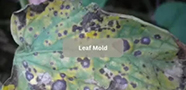
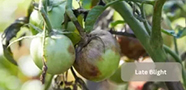
The Biological Control with FloraEgis is used in preventive and disease control. FloraEgis should be applied as foliar spray or as a root drench so as to introduce favorable fungi into the rhizosphere and aerial parts of the plant. Begin application at first sign of the season as an initial treatment and then after crop development or disease pressures.
This should be done intercropping with non hosted crops such as cereals or legumes especially where soil borne diseases such as A. solani is a major concern.Succession planting of solanaceous crops (tomatoes, potatoes, peppers, etc.) must not be done on a single piece of ground. Do not water the foliage from above, and water only at the root area because excess moisture on the foliage area will lead to Leaf Mold, Early Blight, and Late Blight. Use of water in the early morning to let the foliage dry during the day to minimize high humidity at night in the canopy. Pruning and keeping proper space will minimize density and humidity and make unfavorable conditions to diseases like Cladosporium fulvum (Leaf Mold). Add organic amendments in your soil such as compost or well rotten animal manure to improve microbial activity. This fosters the establishment of all round useful microbes such as Trichoderma harzianum derived from FloraEgis.
Tomato Pests and Diseases Organic Treatment
Organic treatments for tomato pests and diseases are safe and efficient methods compared to chemical based products. Such chemicals as Beauveria WP used to control pests such as the Tomato Potato Psyllid are safe for the environment. When pest control for tomatoes is done organically it is possible to reduce harm on the plants while at the same time proactively ensuring that other useful insects are not harmed. Moreover, the approach to using organic products to treat tomato diseases does not only cure the current ailments but also supports the remedial of the two dirt /aises and enhanced health of the plants. These organic practices are important in raising good quality tomato fruits, controlling the impacts of the new reformed, sustainable farming.

Related Products
CONTACT US

Office 38/1502, No 660,Hanguang Rt., Changsha City, Hunan, China


